From an intimate London gathering to the historic workshops of Northampton, a journey into British heritage, exceptional craftsmanship, and the beauty of doing things the long way round.
There is something unmistakably British about Church’s. A certain understanding of elegance that never needs to announce itself, a respect for tradition that feels entirely natural, and an appreciation for the smallest details. It is an identity built over generations, one that continues to evolve without ever losing sight of its origins.
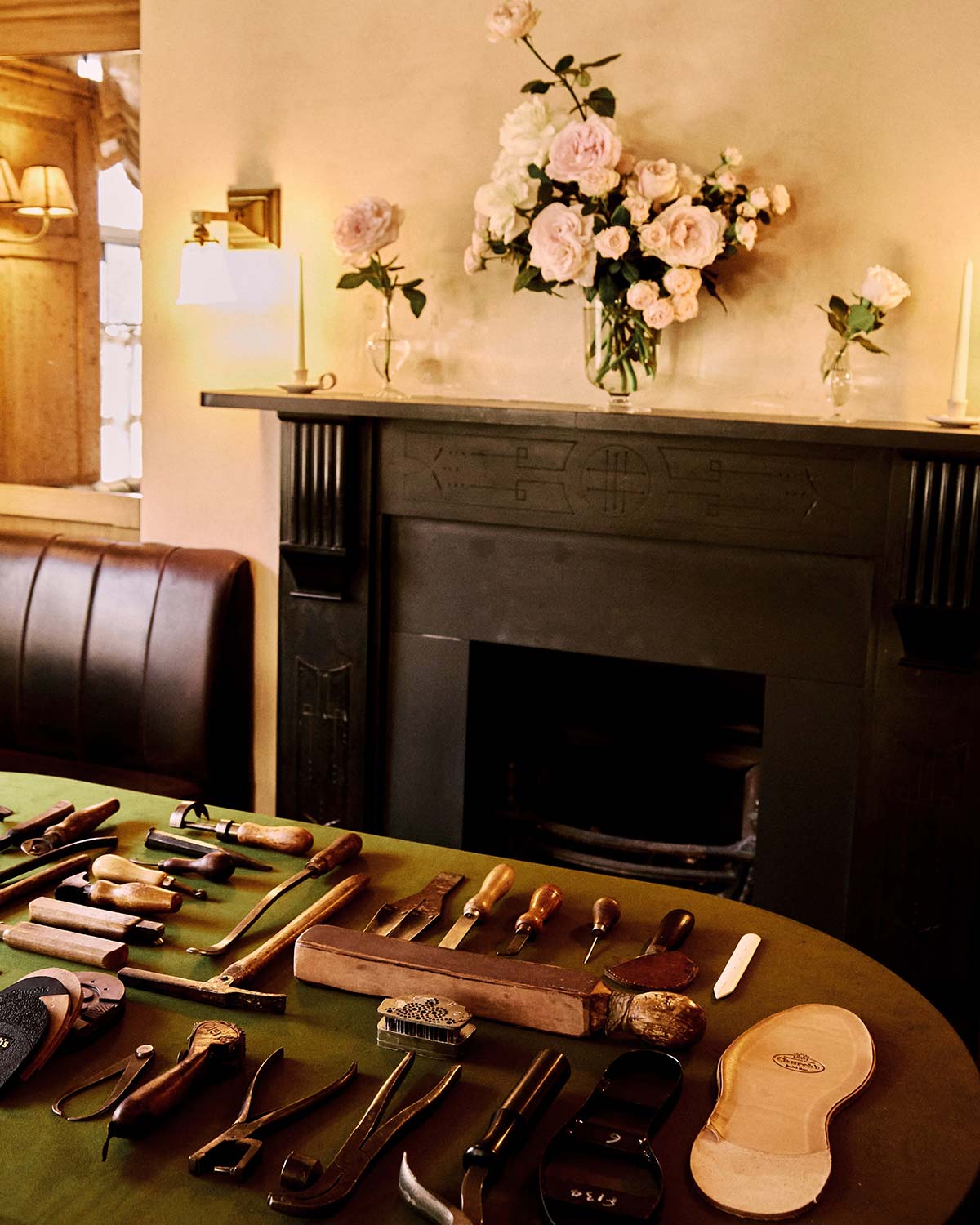
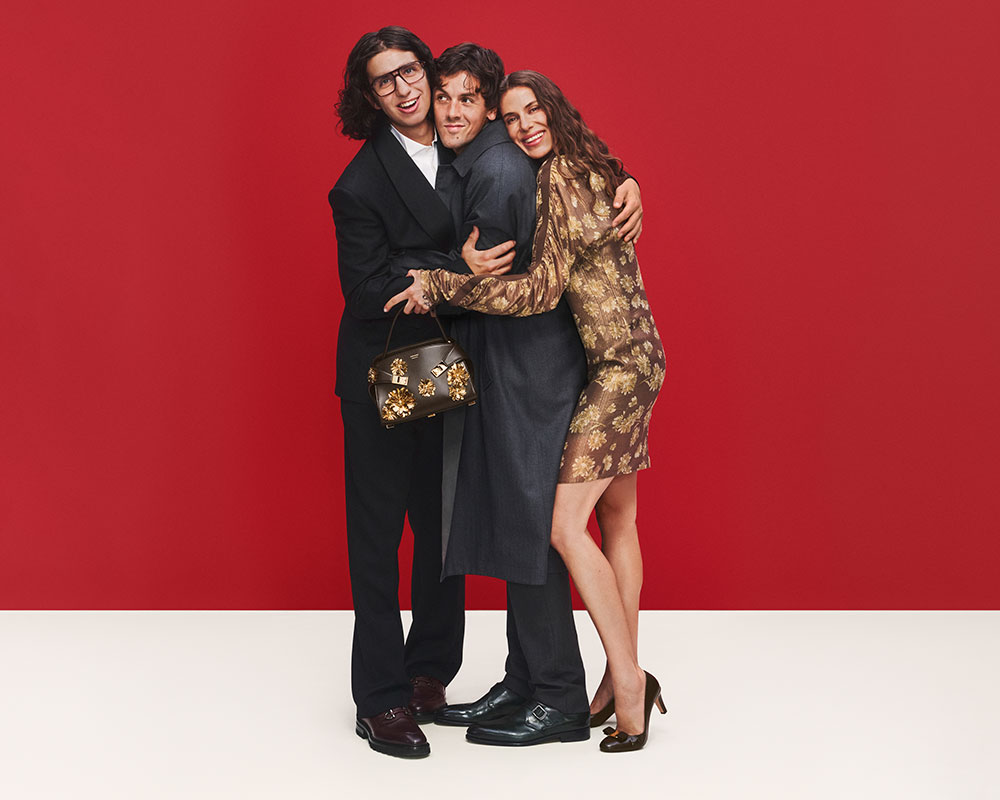
It was precisely this spirit that Church’s celebrated in London with Church’s Club, an exclusive evening hosted at The Hart, in the heart of Marylebone. Bringing together friends of the house, international press, and familiar faces, the event offered an intimate immersion into the brand’s universe, where British culture, contemporary sophistication, and a sense of conviviality came together effortlessly.
The evening also provided an opportunity to discover the latest footwear proposals, including the men’s New Formal and women’s Sloane collections, both exploring contemporary silhouettes while remaining faithful to the house’s shoemaking heritage. From refined Oxford shoes and Chelsea boots to elegant feminine designs with subtle retro influences, each creation reflected Church’s ability to reinterpret classic codes with a modern sensibility.
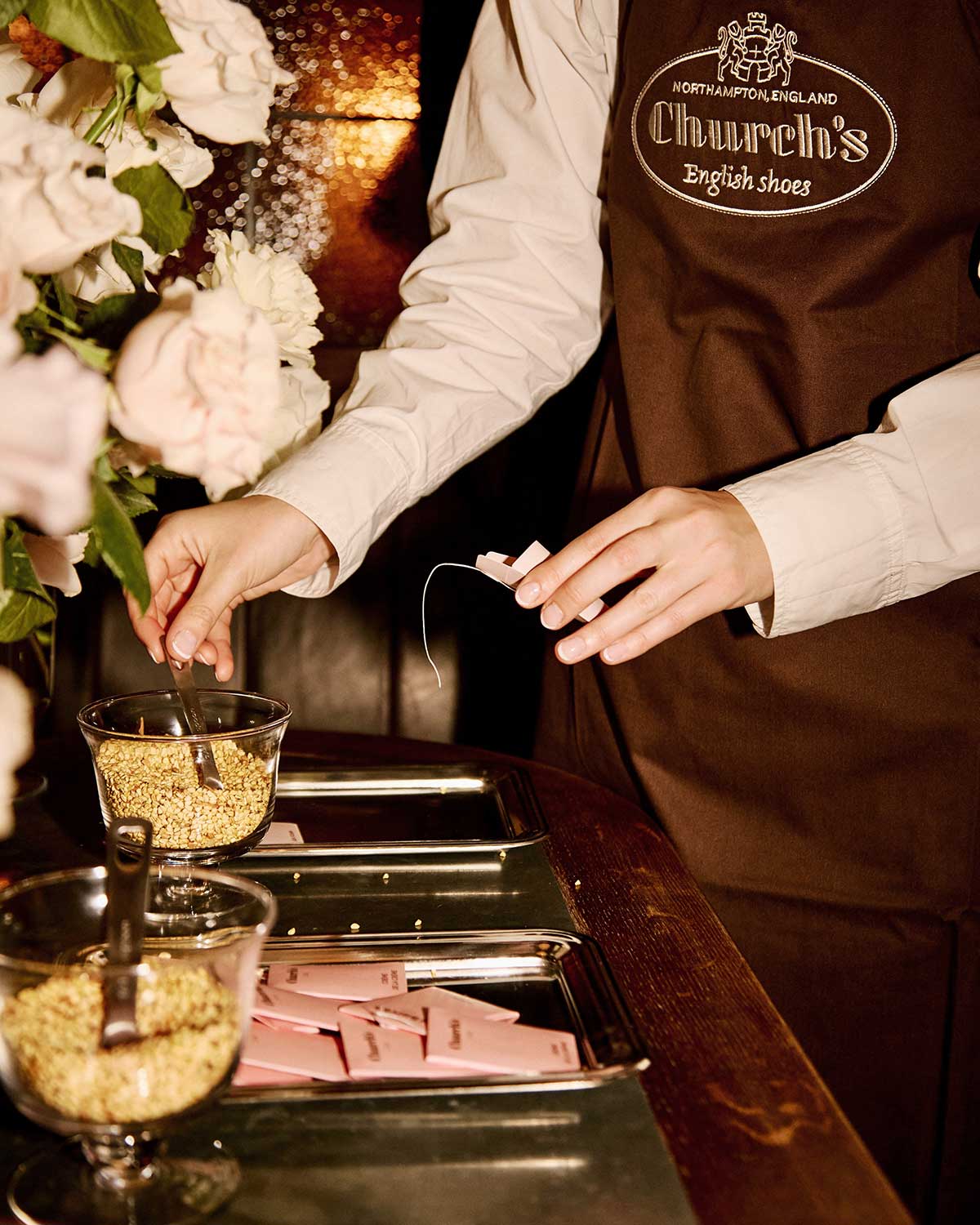
Yet beyond the collections, the evening celebrated something even more essential to the house: its profound connection to Northampton, the historic heart of British shoemaking.
This connection was expressed through the presence of master shoemakers from the factory, as well as a tribute to Northamptonshire’s celebrated roses. Known as The Rose of the Shires, the county inspired botanical installations and a dedicated gin experience, bringing a little piece of the English countryside into the heart of London.
But to truly understand Church’s, one has to travel beyond the capital, to the place where everything begins.
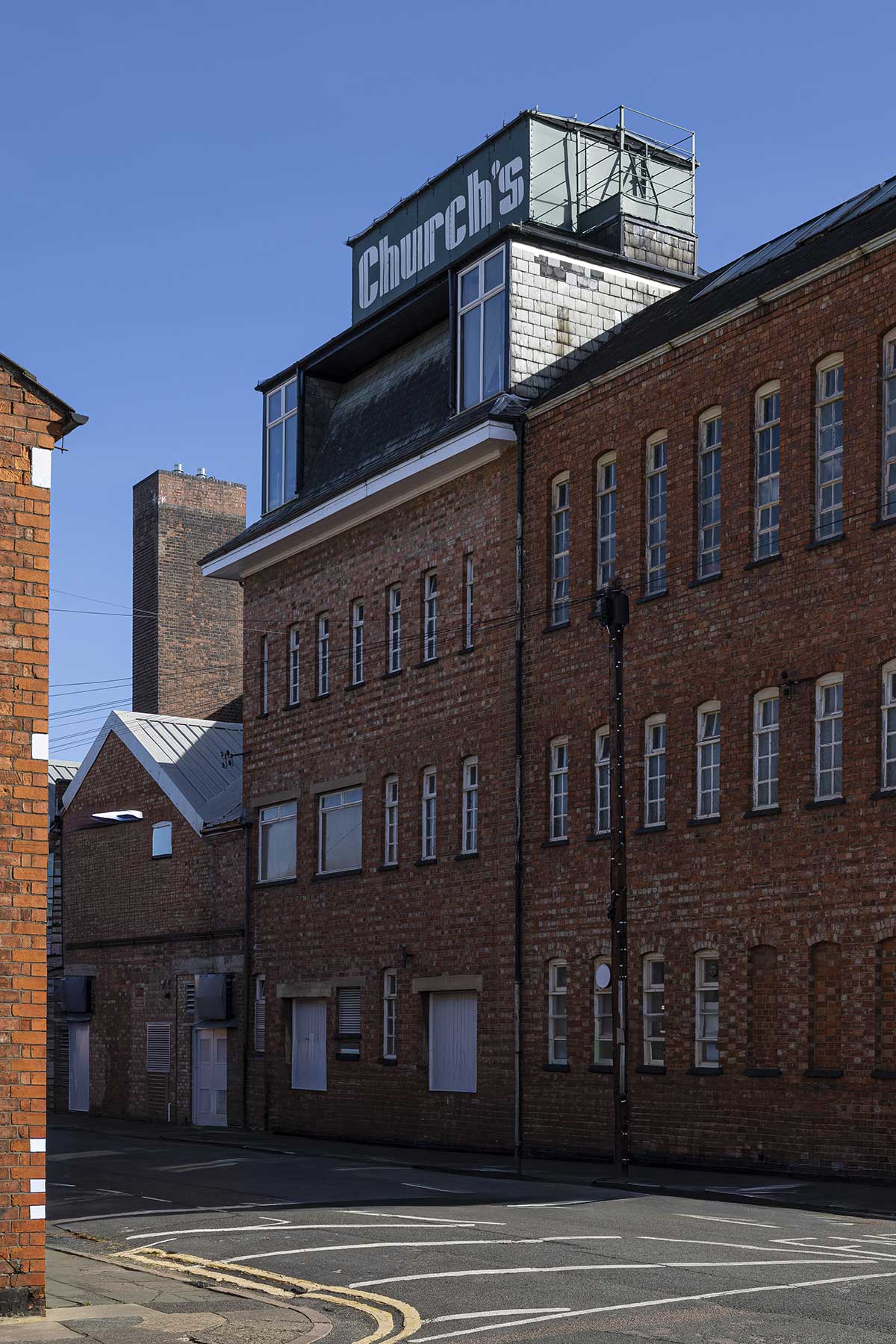
Northampton: Where Time Becomes Craft
In Northampton, inside a four-storey building on St James Road, time seems to follow a different rhythm.
Here, the creation of a single pair of shoes can take up to twelve weeks, passing through more than 320 individual processes and the hands of highly skilled craftspeople. It is a remarkable commitment in an industry increasingly defined by speed, but one that reveals the philosophy at the heart of Church’s: true craftsmanship cannot be rushed.
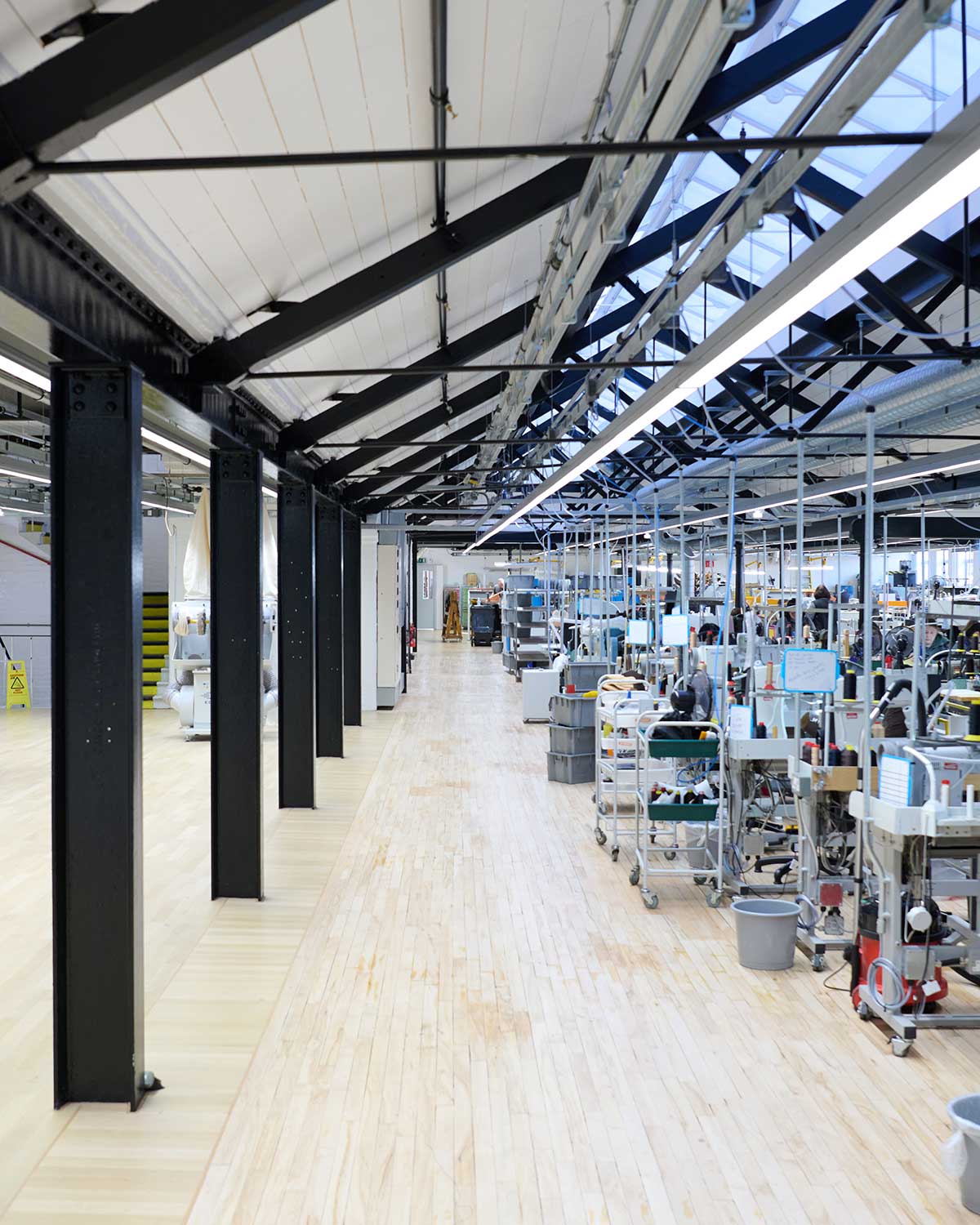
The factory is much more than a production site. It is a living archive of British shoemaking, where traditional techniques coexist with specialized machinery and where generations of knowledge continue to shape every creation.
This philosophy finds its most complete expression in the Crown and Royal collections, the house’s most prestigious footwear lines, conceived not simply as luxurious objects but as a celebration of the extraordinary expertise behind their creation.
As Simon Hill, who has spent 31 years at the Northampton factory and now serves as its archivist and historian, explains, the distinction begins long before the shoe takes shape. It begins with the leather itself.
For these collections, Church’s selects exceptional crust leather, treated through two tanning processes and left almost entirely in its natural state. Unlike conventional finished leather, its surface reveals every imperfection, demanding an extraordinary level of precision during selection and cutting.
Each hide is examined and stretched by hand before the most experienced craftsmen, traditionally known as clickers, carefully cut the individual components. While a standard hide might produce four to six pairs of shoes, the leather selected for Crown and Royal will yield only one or two.
It is the first indication of a process in which quality is never negotiated in favour of efficiency.
As the journey continues through the factory, every department reveals another layer of expertise. In the closing room, where the upper begins to take shape, exceptionally fine needles and threads are used to create precise stitching without the assistance of pre-marked guidelines. The accuracy of each seam depends entirely on the skill and experience of the person behind it.
Further along, the leather is gently humidified before being shaped around the last, the structure that determines the shoe’s final silhouette. At this stage, one of the factory’s guiding principles becomes particularly meaningful: the machine provides the muscle, but the human provides the skill.
Once shaped, the shoe remains on its last for at least eight days, allowing the leather fibres to dry, settle, and retain their form. In a world obsessed with immediacy, the decision to simply wait becomes an essential part of the creative process.
The same dedication defines the colouring of the leather. Rather than applying a uniform finish, Church’s artisans work with successive layers of dye, each applied by hand with a sponge and carefully blended to achieve depth, richness, and subtle variations in tone. Four separate applications, with time allowed for absorption between each, gradually transform the natural leather into a surface full of character.
The construction itself is equally meticulous. Using the traditional Goodyear method, the shoe incorporates a cork layer beneath the foot, designed to adapt gradually to the wearer’s individual shape.
Among the most remarkable details is a discreet technique used to conceal the stitching beneath the leather sole. The leather is carefully cut, folded back, stitched, and then returned to its original position, leaving the underside beautifully uninterrupted.
It is a detail that most people will never notice. And perhaps that is precisely what makes it so extraordinary.
The Beauty of the Invisible
There is a particular kind of luxury that exists not in what is immediately visible, but in the care devoted to details that may never be seen.
At Church’s, this philosophy becomes especially evident during the final stages of production.
The heel is finished with a brass insert, selected for its durability and ability to wear naturally alongside the surrounding leather. The edges are meticulously worked by hand until the heel and sole appear as one continuous element, while coloured beeswax is applied to seal and refine the leather.
Even the underside of the sole receives an elaborate decorative finish, including a delicate spray treatment that creates subtle tonal variations. It is an effect that may disappear after just twenty minutes of walking, yet the artisans dedicate the same attention to it every single time.
There is something almost poetic about this gesture: creating beauty with the full knowledge that it will soon disappear.
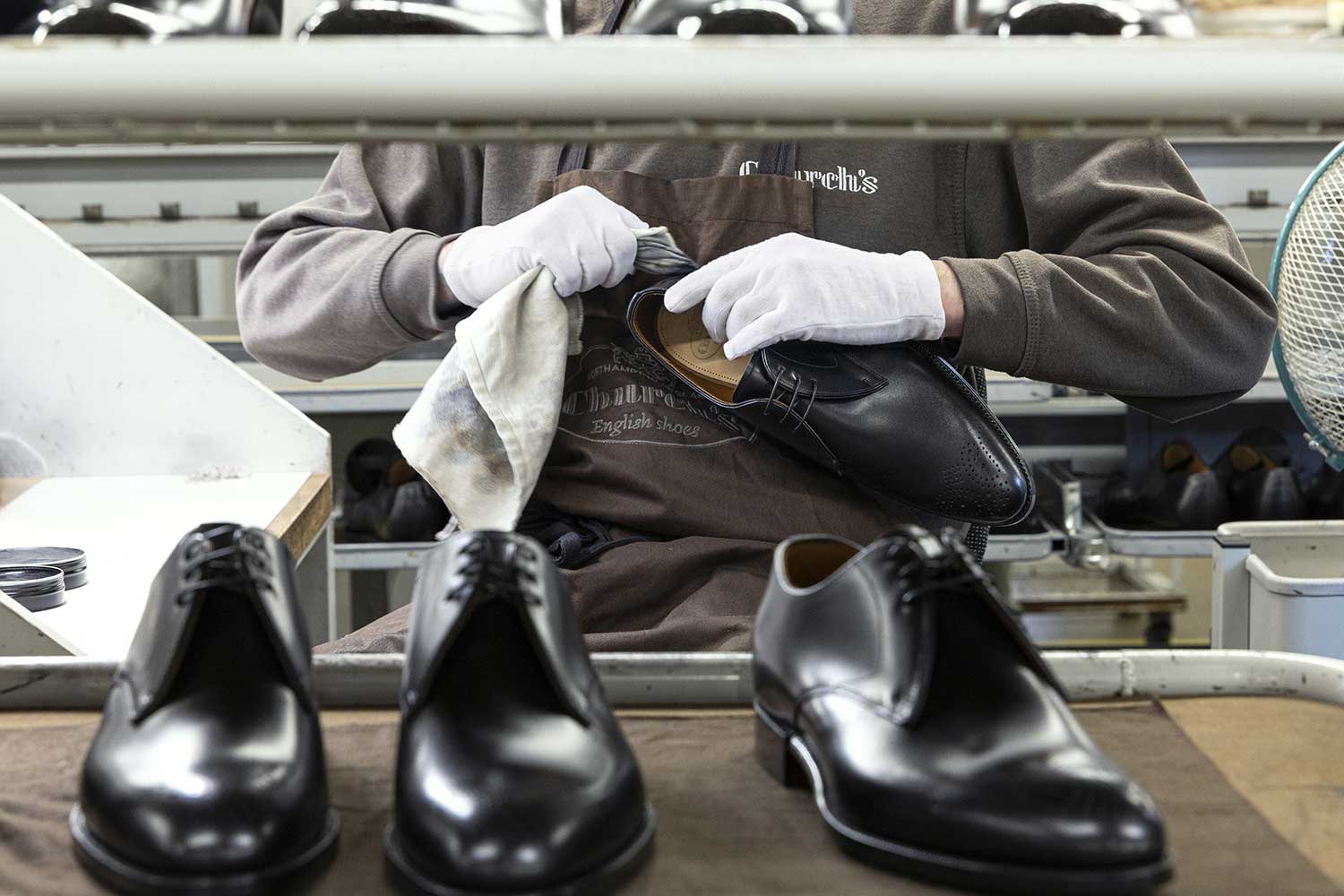
The final polishing is another ritual in itself. Creams and waxes are applied by hand, layer after layer, until the leather achieves its characteristic depth and lustre. Depending on the shoe, this stage alone can require between one and two hours.
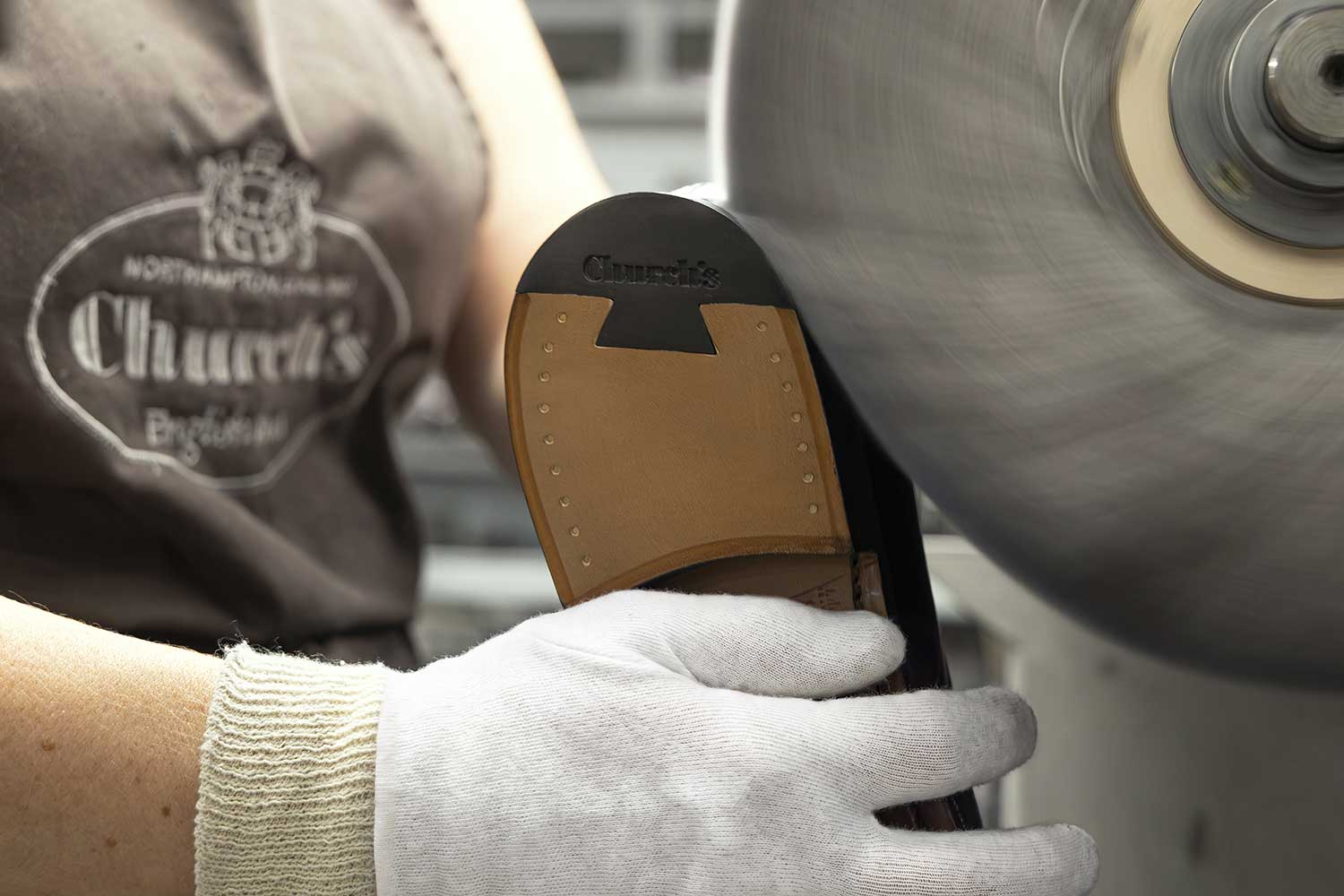
Nothing is hurried. Nothing is considered insignificant.
Yet perhaps the most fascinating aspect of the Northampton factory is not simply the complexity of its processes, but the people who preserve them.
Around 160 skilled craftspeople work within the factory, many carrying decades of experience. As some of the most experienced shoemakers approach retirement after thirty, forty, or even fifty years, the question of passing their knowledge to the next generation becomes increasingly important.
Long before a national apprenticeship programme existed, Simon Hill helped establish an internal training initiative designed to ensure that these techniques would continue to survive.
Because craftsmanship is not only about preserving objects. It is about preserving knowledge, gestures, instincts, and ways of working that cannot simply be reproduced by machines.
In this sense, the Crown and Royal collections represent something far greater than exceptional footwear. They are a commitment to continuity, a way of keeping traditional skills alive while allowing them to remain relevant in the present.
From the convivial atmosphere of Church’s Club in London to the quiet concentration of the Northampton workshops, the same philosophy runs through every expression of the house.
An understanding that elegance is rarely about excess, that true quality often lies in what cannot be seen, and that some things are worth taking the long way round to achieve.
At Church’s, time is not simply part of the process. It is part of the luxury itself.